Yom Kippur closes the Ten Days of Repentance that open with Rosh Hashanah, and the break-fast is the first ordinary human moment at the end of it. That is what makes it different from every other gathering you will host. Nobody wants to be greeted, seated or entertained. They want water, a chair and something to eat, in that order, and they want it without the host disappearing into a kitchen.
Hosting it well is almost entirely a matter of sequence. Here is how to plan the evening from a Chicago-area calendar backwards, so that when the room fills at once, nothing about the meal requires your attention.
View the break-fast menu and place your order.
This is the hosting-and-timing guide: use it for delivery timing, guest arrivals, setup, serviceware, and dietary planning. For current menu availability and ordering, visit the Yom Kippur break-fast catering and delivery page.
Start From the 2026 Chicago Calendar
Everything is anchored to nightfall, not to a dinner hour you choose.
- Erev Yom Kippur, Sunday, September 20, 2026. Candle lighting in Chicago is at approximately 6:33 pm. The pre-fast meal, the seudah mafseket, is traditionally eaten in the afternoon and finished before that time. It is traditionally mild and moderate rather than heavy, and it is not a celebratory meal.
- Yom Kippur, Monday, September 21, 2026. The day is spent in synagogue. Nothing about your event may require anyone’s attention during the day, including deliveries, phone calls or setup.
- Fast ends at nightfall, Monday, September 21. Havdalah in Chicago is at approximately 7:31 pm, roughly a twenty-five hour fast. Times are computed for Chicago coordinates and communities vary in the custom they follow, so confirm against your own congregation.
The practical consequence is that Sunday afternoon is your only real working window. Anything that has to be received, arranged, chilled or laid out should be handled before candle lighting Sunday evening, or scheduled to be handled by someone who is not observing.
Build the Evening Backwards From 7:30 pm
Work from nightfall in reverse and the plan writes itself.
- 7:30 pm, doors open and the first wave is already out. Water, juice, something light and sliced, and a soup if you serve one. On the table, uncovered, before anyone knocks.
- 7:15 pm, uncover everything. The main spread goes out fully. Nothing waits in a refrigerator for a host to retrieve.
- 6:45 pm, final setup. Plates, flatware, napkins, serving utensils, coffee station, trash and recycling stations placed.
- Sunday afternoon before 6:33 pm, receive and stage. Take delivery, arrange refrigeration, position tables and surfaces, lay out serviceware, and set up the beverage station.
- The week before, confirm. Headcount, delivery window, dietary list, and who is doing what.
If you will be at services until roughly 7:30 pm yourself, one of two things has to be true: either the food is entirely ready to set out cold or at room temperature, or someone who is not observing is at the house to put it out. Plan for the first. It is the reason break-fast menus are built the way they are.
Plan for the Arrival Wave, Not a Seated Dinner
Guests do not trickle into a break-fast. Congregations release within minutes of each other, and fifteen people can be through the door in a five-minute span, all of them having gone a full day without food or water.
- Put water at the entrance, not on the buffet. Pitchers and glasses on a console or side table by the door so people can drink before they queue.
- Split the serving surface. One line for twenty-five guests creates a ten-minute wait at the worst possible moment. Use two surfaces, or duplicate the anchor platter at each end of one long table.
- Set the flow in one direction: plates, then anchor platters, then the substantial dishes, then salads. Dessert and coffee go on a completely separate surface, ideally in another room, so returning guests do not cross the main line.
- Seat more people than you think you need to. Guests who have fasted want to sit down. Standing-reception seating ratios do not work here. Borrow chairs.
- Do not organize the evening. No toasts, no speeches, no program, no music that demands attention. The room will find its own tone and it usually turns social on its own after twenty minutes.
Serviceware: Choose Deliberately, Not by Default
This is where hosts either buy themselves a calm evening or an hour of dishes.
- Disposable, upgraded. Heavyweight plates, real-weight flatware and cloth-feel napkins. For a household break-fast this is the standard choice and nobody experiences it as a compromise. It also removes the post-meal cleanup entirely, which matters when the evening ends late.
- China and linens. Appropriate when the break-fast is a seated, hosted meal rather than a buffet, or when it is part of a larger gathering. Worth knowing that it adds a dish load at the end of a long day, so pair it with staffing if you go this route.
- Serving pieces. Count them before Sunday. Every spread needs more serving spoons, tongs and fish forks than a household owns. This is the single most common last-minute gap.
- Chafing and warming. Mostly unnecessary and sometimes counterproductive. A break-fast spread is designed to be served cold or at room temperature. If you do want one warm dish, set the equipment up on Sunday and use a timer rather than lighting anything after nightfall.
- Labels. Small cards on each dish. Guests who have fasted should not have to ask what is in something, and it does most of your allergen communication silently.
Collect Dietary Needs When You Invite, Not When You Order
The dietary list is the part of break-fast planning that gets left until it is too late to act on.
- Ask in the invitation. One line requesting allergies, vegetarian, vegan and gluten-sensitive needs, sent ten to fourteen days out, gets a far higher response rate than a reminder the week of.
- Compile it into one document rather than a scattering of text messages. Send that single list to your caterer as part of the order, not as an afterthought.
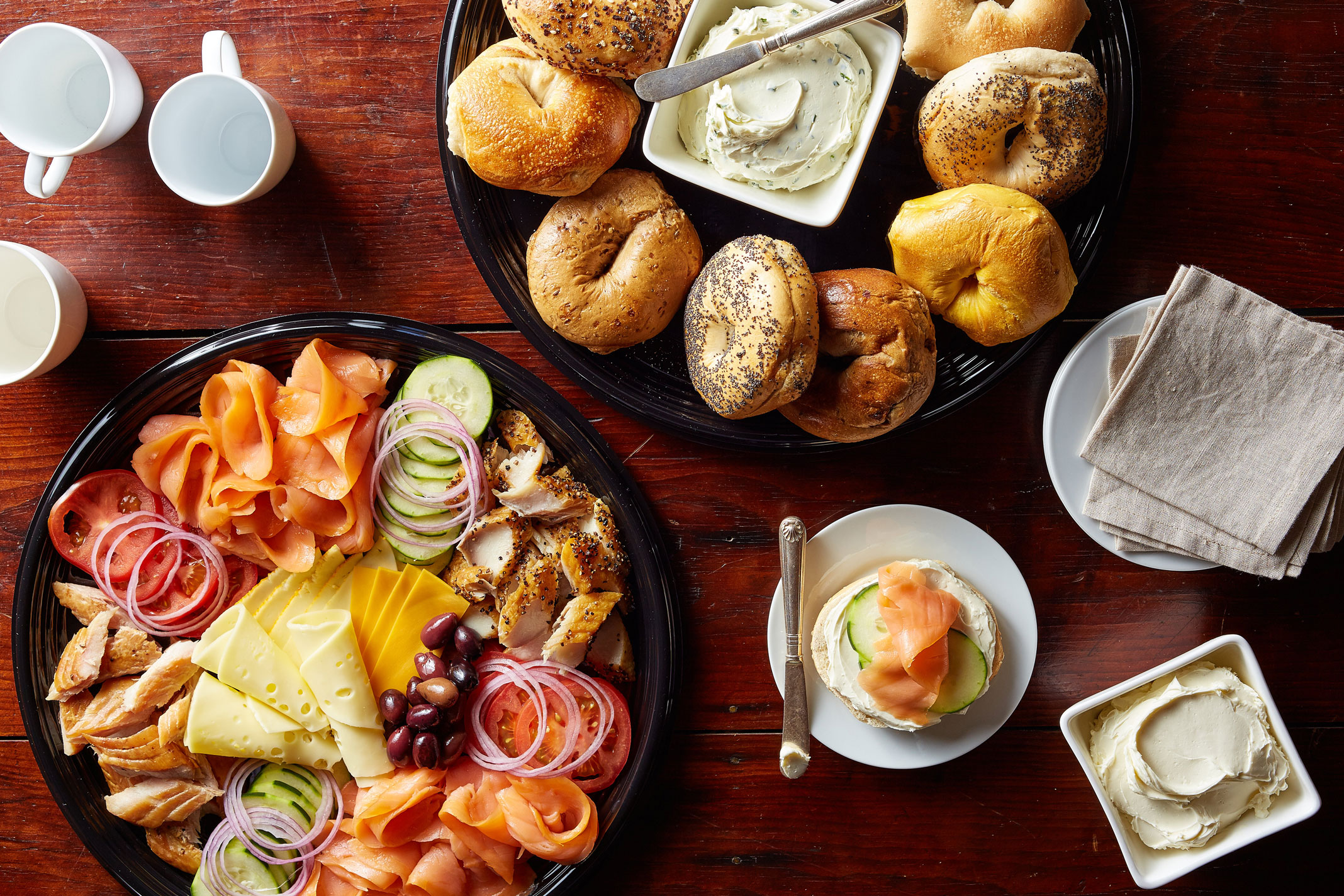
- Decide dairy or meat and say so. Most Chicago-area break-fasts are dairy, which is why the traditional table is built on bagels, spreads, smoked fish and kugel. Households that keep meat and dairy separate should not receive a mixed table, and stating which it is in the invitation prevents a dozen quiet questions at the door.
- Know your guests on smaller customs. Some families avoid certain ingredients during this period, and some guests will have preferences you would not guess. Asking is always better than assuming.
- Plan a visible option for each restriction. One clearly labeled vegan dish and one clearly labeled gluten-sensitive option, positioned where they are easy to reach, does more for a guest’s comfort than a wide menu they have to interrogate.
Chicago-Specific Logistics Worth Planning For
- Delivery windows compress. Every caterer in the Chicago area is producing High Holiday orders in the same handful of days. A Sunday delivery slot is easier to secure than a Monday evening one, and Sunday staging is the more reliable plan regardless.
- Refrigerator space is the hidden constraint. A break-fast for twenty arrives as a meaningful volume of chilled platters. Clear a shelf on Saturday, not Sunday afternoon.
- North Shore travel time. If guests are coming from congregations in Wilmette, Glencoe, Northbrook, Highland Park or Evanston, arrival times spread over twenty minutes rather than five. Keep the first wave replenished for that whole window.
- Parking and entry. Guests arriving after dark in a residential neighborhood benefit from a lit path and a propped or unlocked door so nobody is standing outside.
- Synagogue and community break-fasts run on the same clock but need duplicated stations, grab-and-go portioning and headcount buffers, because attendees arrive with family members who were never counted.
Where a Caterer Takes the Weight
Catering by Michaels has produced Chicago-area events since 1980 from the Morton Grove kitchen at 6203 Park Ave. For break-fast specifically, the useful questions are logistical ones: ask which current items arrive ready to set out, whether anything needs finishing, how dishes hold at room temperature, how trays are sized, and whether a delivery can be timed for staging the day before. [Confirm each of these operational points with the client before publish rather than stating them as capabilities.]
For what to serve, see our Yom Kippur break-fast menu, and for the season as a whole see the complete Rosh Hashanah and Yom Kippur planning guide.
To confirm 2026 delivery and pickup windows, discuss a dietary list, or place an order, call (847) 966-6555 or contact the Catering by Michaels team. High Holiday capacity closes ahead of the holiday, so an early headcount protects your menu and delivery options.
Frequently Asked Questions
What time does the fast end in Chicago in 2026?
Yom Kippur begins at sundown on Sunday, September 20, 2026, with Chicago candle lighting at approximately 6:33 pm, and ends at nightfall on Monday, September 21, with Havdalah in Chicago at approximately 7:31 pm. Times are computed for Chicago coordinates and customs vary, so confirm with your congregation.
What time should I tell guests to arrive at a break-fast?
Most Chicago-area hosts set 7:30 pm and have the first wave of food out beforehand. Because congregations across the North Shore release at slightly different times, expect arrivals to spread across roughly twenty minutes and keep the entry table stocked for that whole window.
When should the break-fast food be delivered?
Take delivery Sunday afternoon before candle lighting and stage everything then. That keeps Monday clear, which matters because the day is spent in synagogue and nothing about the meal should require attention during it.
Do I need staff for a break-fast in a private home?
Usually not, if the menu is built to be set out cold or at room temperature. Staffing earns its place at larger scale, in synagogue halls and rented spaces, and where replenishment, clearing and beverage flow need dedicated hands while the host is greeting people.
Should I use china or disposable serviceware?
For a household buffet in the Chicago suburbs, upgraded disposable serviceware is the standard and practical choice, and it removes cleanup at the end of a long day. China and linens suit a seated hosted meal, and pair better with on-site staffing.
How do I collect dietary restrictions in time to act on them?
Ask in the invitation, ten to fourteen days out, and compile the responses into one list you hand to your caterer with the order. Requests gathered the week of the holiday usually arrive too late to be built into production.
How many guests should I plan seating for?
More than you would for a standing reception. Guests who have fasted for roughly twenty-five hours want to sit. Borrow or rent chairs rather than assuming half the room will stand.